Right here in Des Moines
Basement Finishing Waukee in Des Moines
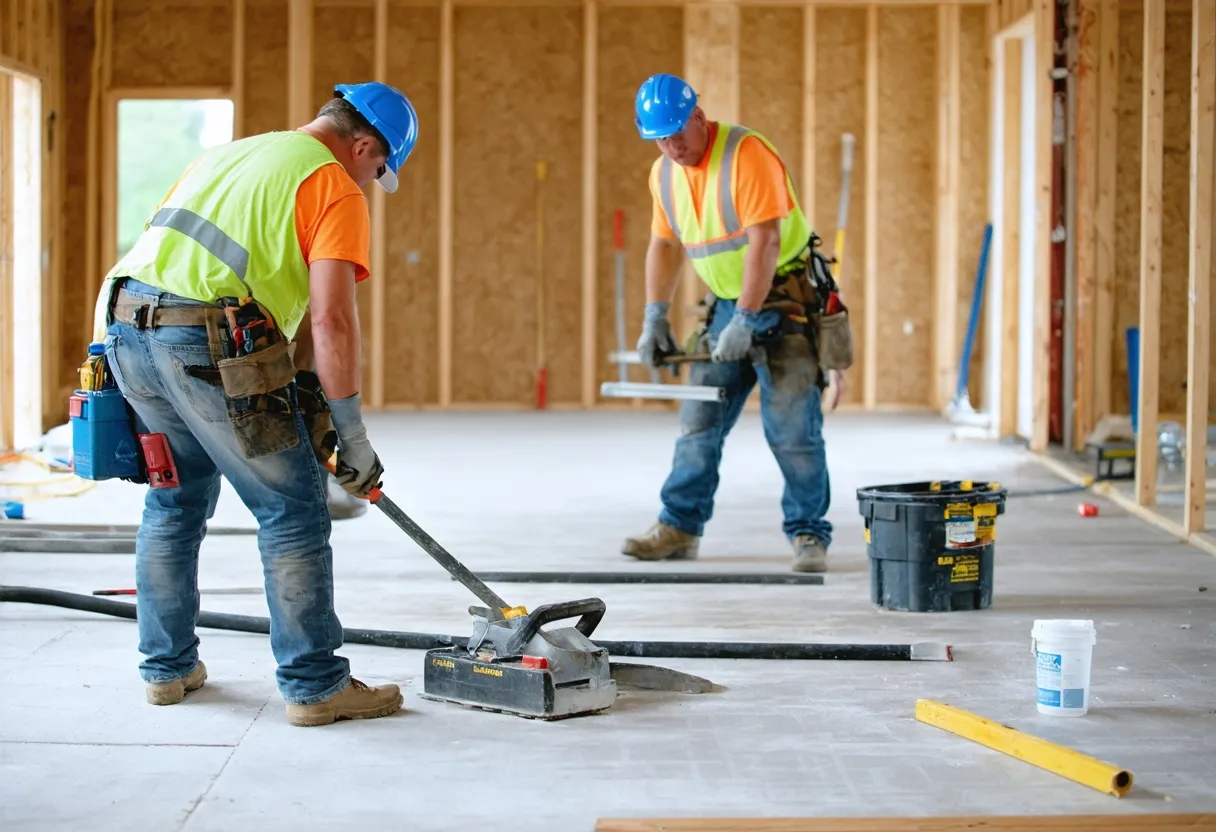
Basement finishing in Waukee means building out unfinished square footage that, in this city, is almost always brand new. Waukee has been one of the fastest-growing communities in the Des Moines metro for over a decade, and that growth shows up in its basements: subdivisions along the Alice's Road corridor and around Kettlestone were built within the last several years, which means most Waukee basements are still full-height, poured-concrete shells with rough plumbing stubbed in and nothing else. Des Moines Basement Finishing works with Waukee homeowners on exactly that kind of project — a basement remodel in Waukee, IA that starts as a blank concrete box and ends as finished living space, priced on paper before a single stud goes up.
We also serve the surrounding metro — West Des Moines, Ankeny, and Johnston — but Waukee has its own quirks worth knowing before you call a basement finishing contractor in Waukee, Iowa. The city sits across the Dallas–Polk county line, its own building department issues permits rather than the county, and Iowa's radon potential means most Waukee basement jobs touch a mitigation system at some point. Every quote we write states the per-square-foot number, the permit path, and the warranty terms in writing, so you're comparing an actual scope of work, not a phone-call guess.
What Drives Basement Finishing Pricing in Waukee
The per-square-foot number is a starting point, not the whole quote
Basement finishing pricing works on a per-square-foot base for standard build-out — framing, insulation, drywall, flooring, trim, and basic electrical across the open area of the basement. That base number is what most Waukee homeowners hear first, and it's a fair way to compare bids apples-to-apples between contractors. But a basement remodel in Waukee, IA rarely stops at open square footage; what actually changes the total is what sits inside that footprint, and that's where a verbal estimate stops being useful.
What actually moves the number on a Waukee job
Four things drive most of the variance we see on Waukee basement projects specifically:
- Egress requirements. If you want a legal bedroom in the basement, code requires a compliant egress window and window well — and in a full basement with several feet of poured wall below grade, that's a deeper dig and a larger well assembly than a walkout or lookout lot needs.
- Radon system tie-in. Iowa sits in the EPA's highest radon potential zone, and many newer Waukee homes were built with a passive radon rough-in stubbed during original construction. Finishing the basement is the natural time to confirm that system is active and correctly sized, or add mitigation if it isn't — that's priced as its own line item, not folded silently into the total.
- Plumbing rough-in status. Newer Waukee subdivisions often stub basement plumbing during the original build, which lowers bathroom or wet bar costs considerably versus a basement with no rough-in at all. We check this during the walkthrough, since it can swing a bathroom addition significantly either direction.
- Ceiling height and mechanicals. Ductwork, sump pumps, and water heaters placed mid-room during original construction sometimes need soffits, relocation, or a closet built around them to finish cleanly, and that work is priced separately from open-area square footage rather than absorbed into the base rate.
We walk through every one of those factors before you sign anything, itemized line by line in a written quote you can actually audit — not a single lump figure you have to take on faith.
What You Get in Every Waukee Basement Quote
How a Waukee Basement Project Runs, Start to Finish
We measure the space, check window and ceiling clearances, and note the radon and plumbing rough-in status, then hand you a written quote broken out by line item rather than a verbal ballpark.
Waukee issues its own building permits rather than routing through Polk or Dallas County, so we file plans and schedule inspections directly with the city before any framing starts.
Framing, electrical, and any egress window or radon mitigation work proceed in sequence with inspection sign-offs at each stage — framing, rough-in, insulation — instead of everything happening at once.
You walk the finished space with us against the original written quote line by line, and warranty terms are documented in writing before final payment, not promised over the phone.
Basement Finishing Questions From Waukee Homeowners
Do I need a permit to finish a basement in Waukee, Iowa?
Yes. The City of Waukee's own building department issues permits for basement finishing rather than deferring to Polk or Dallas County, and inspections are scheduled directly with the city at framing, rough-in, and final stages before you can legally occupy the space.
How is basement finishing priced in Waukee?
The base is a per-square-foot rate for standard build-out — framing, insulation, drywall, flooring, and trim. Egress windows, radon mitigation tie-ins, bathroom plumbing, and mechanical relocation are itemized as separate line items in the written quote instead of being bundled into one unclear number.
Does my basement need an egress window to be finished?
Only if you're adding a legal bedroom. Code requires a compliant egress window and window well for any basement sleeping room, and we check ceiling height, wall depth, and lot grade during the initial walkthrough to price that correctly for your specific lot.
Is radon mitigation required when finishing a basement in Waukee?
Iowa sits in the EPA's highest radon potential zone, and many newer Waukee homes already have a passive radon rough-in from original construction. We check whether that system is active and correctly sized for the finished space, and price mitigation separately if it needs to be added or upgraded.
Will finishing my basement need HOA approval in a Waukee subdivision?
Some newer Waukee subdivisions carry HOA architectural or covenant requirements that touch basement work, especially where an egress well changes exterior grading. We recommend checking your covenant before the permit is filed, and we'll work from whatever documentation your HOA requires.
How long does a basement remodel take in Waukee?
Timeline depends mainly on inspection scheduling with the city and whether an egress well needs to be excavated, which can be weather-dependent. We give you a written schedule tied to the permit stages during the walkthrough rather than a generic estimate.
Written Warranty Terms, Not a Verbal Promise
Every Waukee basement project closes with warranty terms documented in writing, not a handshake. You see exactly what's covered and for how long before final payment changes hands, so there's nothing to remember or dispute later.
Waukee's New-Construction Basements Are a Different Kind of Project
Waukee has grown from a small town on the western edge of the metro into one of Iowa's fastest-expanding cities, and most of that growth happened within the last fifteen years. That timeline matters for basement finishing: unlike older Des Moines neighborhoods where a basement remodel often means gutting a decades-old rec room, most Waukee basements have never been touched. They're poured-concrete shells with a sump pit, a furnace, and rough plumbing capped off — standard in nearly every new build around Kettlestone, the Alice's Road corridor, and the subdivisions filling in south and west of downtown Waukee.
Full basements versus walkouts
Lot grading varies block to block in newer Waukee developments. Some homes sit on full basements with poured walls several feet below grade on every side; others sit on lookout or walkout lots where one wall is mostly above grade with larger factory windows already in place. That difference changes the egress conversation directly — a walkout basement may already meet bedroom light and emergency-exit requirements, while a full basement usually needs a window well excavated and installed to add a legal bedroom. We confirm which situation applies to your lot during the first walkthrough, before pricing anything.
Built for families staying long-term
A large share of Waukee's growth has been driven by families buying new construction in the Waukee Community School District, often leaving the basement unfinished on purpose so they can finish it later once they know how the household will actually use the space — a home office, a guest suite for visiting family, a rec room once kids are a bit older. Because the shell is new rather than decades old, structural surprises are rare on a Waukee job; the work is mostly build-out, not repair, which keeps timelines more predictable than in an older Des Moines home with an unknown foundation history.
Also Serving Des Moines Metro Communities Near Waukee
Get Your Basement Quote
Upfront per-square-foot pricing and warranty terms in writing, not a verbal promise.
More basement finishing services
Ready for a Written, Per-Square-Foot Quote?
Get a clear cost breakdown and a permit-compliant plan for your Des Moines basement.